Powered By Blogger

Wednesday, May 25, 2016

Apocalypse; then or now?

IMGend1
end2
APOCALYPSE; then or now?       

 Photos were from advertisements that I received in the mail and are used as effect only.

By Richard Joseph
5/25/2016    


        A future Apocalypse makes a great movie (even though I never saw it) but that might be all it makes. I used to believe in a dooms day that was to come upon us and destroy the world. We would be running frantically trying to survive and trying to avoid the Beast from marking our foreheads and hands. I was waiting for the sun to fail and the moon to turn into blood. I always hoped that I wouldn’t meet the 7 headed monster or be burned at the stake. But I have to admit that when the big Jesus floated across the sky and took revenge on evil then I would be jumping with joy. In fact, being the revengeful person that I am, that suited me quite well. The only problem with this scenario is that the bible never talks about a future event like that.
         It did however talk about one that occurred during the first century. After that we are to live under the direction of the Holy Spirit. Christians should live a victorious life thereafter. So why are we now cowering in the corner and allowing others to take over the rule that God gave us?
        I believe it comes down to one question. When were, or are the End Times events?
The common answer is that these events will occur in the future sometime. Sort of like a carrot hanging in front of a horse; the horse keeps going but it never seems to get to the carrot. This is a way for people to make tons of money scaring others into buying their books and movies in hopes of trying to figure out when the end of the world will be. It would be much simpler if they bought a bible and read it. They would quickly find out that there is no such future event predicted in the bible. But, what I really want to address is the attitude that this produces.                 Several authors talked about it and one in particular made a good comparison of a future apocalypse or a biblical apocalypse that occurred in the first century. Kenneth L. Gentry Jr. has addressed this in his book Before Jerusalem Fell on pages 336-337. He makes a great point of the significance of understanding whether the Apocalypse was past or future. He says “Hence, it is of grave ethical and cultural significance in that it impacts on the Christian’s view of history.”  In other words our world view will change diametrically by our view of this matter. If we see it as a future doomsday, we would then take on a defeatist attitude. We would not live in dominant victory like we should but instead be run over rough shod by the world system like what is currently happening. On the other hand, if we understand these events as first century fulfilled then we would work for a better future by the continuing reliance on the gospel. We would not be sitting around waiting for the big Jesus to float across the sky and save us. He already did his work and now it is our turn to appreciate what he did, and will continue to do, through us if we just allow him. Our practical lives would have a more fruitful outlook. We would strive to make a more solid Christian future for our posterity instead of telling them to sit quiet and wait. Christians should be ruling the world but instead we are worried about offending sinners. It is time to let go of the faulty theology and start living the life that Jesus died to give us.

The End of the Law


Wednesday, May 25, 2016

The End of the Law

By Richard P. Joseph
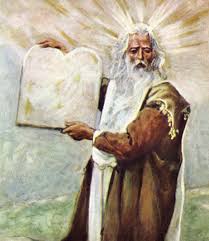

Image result for pictures of moses

Do we then make void the law through faith"  Certainly not!  On the contrary, we establish the law.  Romans 3:31

Moses was commissioned by God to write the law for the newly formed nation of Hebrews as they were coming out of slavery from the Egyptians.  This was a marvelous law

unlike any before it as it addressed nearly every aspect of life as well as prophecy of a coming Messiah and the end of the law as they knew it.  The law outlined sin and what the people had to do for atonement of sin. The law, however, could not abolish sin so it was an incomplete law.  When the Messiah finally arrived in 4BC and finished his mission, most people believe that the law was abolished and some believe it was only partially abolished.  I hope to show you that it was just transferred from one form to another.

There have been many “wise” men who attempted to show us the way.  Jesus, in contrast, said that He “is” the way.  This is a marked difference from mere human philosophers compared with almighty God.  I am going to show a few examples in this article that Jesus did not come to show us the way, but instead came to introduce us to the idea that he is the way.  Let us start with God himself.

El Shaddai, or God Almighty was a familiar term to the Jews.  God made himself known to Moses as “I am who am”.  A term which denotes the idea that God was not an idol which a mere man can name.  God really has no “proper name” despite man’s attempt to give him one.  God is claiming to be the “Eternally Existent One”(The real meaning of YHWH).  He has no beginning and certainly no end.  In the book of Revelation, John records Jesus as saying “I am the Alpha and the Omega, the First and the Last, the Beginning and the End".  Jesus is not saying he was there in the beginning and will be there in the end, he is saying that he “is” the Beginning and he “is” the End.  He is claiming deity.  He made this statement many times in the gospels in which he claimed that he was “I Am”.  My point being that Jesus is not a cult leader showing us the way to eternity, he is claiming to be the Eternal One.  The eternal is based more on spiritual things than physical things.

In Romans 8:3-4 we clearly see the transition from physical to spiritual.  

3 For what the law could not do in that it was weak through the flesh, God did by sending His own Son in the likeness of sinful flesh, on account of sin: He condemned sin in the flesh, 4 that the righteous requirement of the law might be fulfilled in us who do not walk according to the flesh but according to the Spirit.

In other words the law is not just going to vanish into thin air, it is going to be transformed from death to life, from parchment to Christ.  It will now function personally inside each believer instead of being forced upon a nation.  Jesus expressed this idea many times and especially in the beatitudes.

In Matthew 5:17 Jesus is recorded as saying;

17 “Do not think that I came to destroy the Law or the Prophets. I did not come to destroy but to fulfill".

He puts out a notice to all Jews that the keeping of the old law will still be in effect until all things are fulfilled which occurred in AD 70.  From the death of Christ to his return would be a 40 year period as noted all throughout the New Testament.  This is a transition period that would lead to a complete fulfillment of the old law and transition into the new law, from the old covenant to the new covenant consummated by the blood of Jesus Christ.  Notice what Jesus says in the following verses.

Jesus then gives examples of the old versus the new.  He mentions that we have heard that if we murder, condemn, commit adultery etc  they are punished according to the Mosaic Law.  He then tells us how we are to live in the spirit.  We are not judged by outward actions because we are already guilty of those same crimes in our hearts before we ever had the chance to commit the offense.  Jesus is pointing out the fact that we are far more guilty of sin than we ever imagined.  We are in a hopeless state of condemnation and without the ultimate sacrifice we are doomed to eternal punishment.  As we know, the old law required a sacrificial lamb or other appropriate sacrifice.  That is also required in the new covenant.

When John the Baptist saw Jesus coming he exclaimed “Behold! The Lamb of God who takes away the sin of the world!” (John 1:29).  Man often offered a lamb to atone for sin but now it was God’s turn to offer a lamb.  Jesus did not offer a lamb, he was the lamb.  That is why his death, burial and resurrection were all on the required Jewish Holidays that the paschal sacrifice was required to be on. This same scenario played out many times throughout his ministry.  Another example is the Sabbath day itself.

The fourth commandment ordered the Hebrews to keep Holy the Sabbath Day.  This is the day that God Himself rested from his creative work and the Jews were to rest every seventh day from all of their labors.  As Jesus sat on the mount and spoke to a broken people who were   oppressed, and desperate, he said;

28 "Come to Me, all you who labor and are heavy laden, and I will give you rest. 29 Take My yoke upon you and learn from Me, for I am gentle and lowly in heart, and you will find rest for your souls. 30 For My yoke is easy and My burden is light.”

Again, he did not tell them to rest on the Sabbath day, he was telling them that “He was the Sabbath Day”.  Jesus knew that the old Jewish world was passing away and at his second coming in AD 70 it was finally consummated.  There would be no more temple, civil law, Jewish State, nothing.  He was preparing them for the new covenant which he would secure with his own blood.  There would be no more Sabbath Day to rest on according to civil law, there would only be Him to rest in.  Our rest now is in Christ Jesus, not in a day.

  Jesus made it clear that he was the new Sabbath day just as he made it clear that he was the new temple.  After Jesus drove the moneychangers out of the  temple for turning a house of prayer into a business market for scam artists, they challenged him to prove that he had authority to do such things.  In John chapter 2 we find this text:

18 So the Jews answered and said to Him, “What sign do You show to us, since You do these things?”

19 Jesus answered and said to them, “Destroy this temple, and in three days I will raise it up.”

20 Then the Jews said, “It has taken forty-six years to build this temple, and will You raise it up in three days?”

Again, Jesus was not merely defending the physical temple but was trying to tell them that He was the new temple.  God’s presence was to be found in Jesus in the future, not in the old brick & mortar temple.

So, how do we know the way to the temple?    One of the disciples asked that very question:5 Thomas said to Him, “Lord, we do not know where You are going, and how can we know the way?”

This is a common question even today.  People want to know the way to heaven.  Even worse, someone will tell them that Jesus came to “show” us the way.  That might be half right but it falls short of the absolute truth.  Here is the answer that Jesus gave:

6 Jesus said to him, “I am the way, the truth, and the life. No one comes to the Father except through Me.

Again, Jesus does not show the way, he claims that he is the way.  He does not tell us the truth, he is the truth.  He does not lead us to eternal life, he is the eternal life.  We must abide in him and we shall have all of these things.  All “religions” attempt to proclaim the true philosophies of life, but Jesus is the truth of life.  This is the difference between God and man, true and false, right and wrong.  Jesus is God incarnate, not just a mere religious leader.  

This is a lesson that Martha and Mary learned when their brother died.

Most of us are familiar with the story of when Lazarus died.  Jesus came to Bethany four days after his friend was placed in a tomb.

John chapter 11 records this story:

21 Now Martha said to Jesus, “Lord, if You had been here, my brother would not have died. 22 But even now I know that whatever You ask of God, God will give You.”

23 Jesus said to her, “Your brother will rise again.” 24 Martha said to Him, “I know that he will rise again in the resurrection at the last day.” 25 Jesus said to her, “I am the resurrection and the life.

Although Martha had it right that we will rise, either at the resurrection out of Hades, or directly after AD70, Jesus reminded her that He was the resurrection. Even though there would be a resurrection event, it could not have happened outside of Jesus being the power of that Event.  The life resides inside of Jesus. One of my favorite verses in the bible is Revelation 21:23

23 The city had no need of the sun or of the moon to shine in it,[j] for the glory[k] of God illuminated it. The Lamb is its light.

This passage has hidden in it the great mystery of the divine Christ.  Notice that the light is not shining on the lamb, it is proceeding “from” the lamb.  Jesus is God incarnate.  He is not a philosopher, or a mere prophet or someone with great enlightening words, he is God in the human flesh, part of the trinity. Jesus is the new law.  This law has life in itself because grace abounds.  This law is not the written law that man cannot keep but rather the law that Jesus kept for us. We do not abandon the law but we fully accept it in our hearts as fulfilled.  We live the meaning of the law, not the outward letter of the law.  Its tenets are still valid today but as a heart change, not a judgement club.  The old law vanished in AD70 and the new covenant of the blood of the lamb began.  We do not abandon the lessons of the old law, we embrace them, we live by them and we love them because Jesus made it come alive in us.  Instead of death brought by the law, we now have life by grace because Jesus Christ has become the fulfilment of the law.

We could go on and on with this subject but these are just a few examples of how Jesus was the fulfilment of the law and therefore God’s ways are not vanished but actually useful for us today in that we accept God’s Holy ways and justice.


Tuesday, May 17, 2016

Stephen's Speech.

Stephen’s Speech
Image result for image of steven getting stoned
By Richard Joseph  1/11/2015


          In AD 30  the Jewish leadership in Jerusalem convinced the Roman procurator, Pontius Pilate, to execute Jesus of Nazareth. This started a period in history marked by The Acts of the Apostles as recorded by a physician named Luke. The book covers a period of almost 40 years. Near the beginning of this period the Apostolic leadership made a decision to anoint seven leaders that would be able to address the daily needs of the massively growing church. One of those leaders was a man named Stephen.
In chapters six and seven of the book of Acts we read the story of Stephen, a just man that was chosen by his peers to oversee the daily matters of the church and the distribution of necessities to the poor widows that were among the followers of Christ. Stephen, however, also received the gift of the Charismata that the Apostles had.  He performed great acts of wonders and signs among the people by the Holy Spirit.  One day the non-Christian Jews challenged him to a debate. They dragged him into the council of elders and Stephen produced one of the most dramatic and prophetic speeches in the bible. This speech is probably widely misunderstood by most people today but those that first heard it understood it correctly.
Using today’s futurist type doctrines, this speech makes no sense whatsoever.  People are still scratching their heads wondering why Luke spent so much time recording a speech that does not supply time period information in it. However, if approached with a full preterist view point, the speech becomes monumental.  There is so much information in this speech that you could write a book on it.  I intend to only highlight it here.
As we begin to examine his speech we need to find out why he had to give it in the first place. Stephen was dragged into court, not just for what he was preaching, but what was commonly preached in those days and the days to follow especially by Paul and Peter.  The accusers were attempting to prove blasphemy because Stephen was heard preaching “that this Jesus of Nazareth will destroy this place and change the customs which Moses delivered to us” (Acts 6:14).   Notice that he was not accused of preaching "the end of the world in the far future".  That doctrine doesn't exist in the bible.   Actually they were quite close in their accusations. It was common knowledge among the Christians that Jesus Christ has become the fulfillment of the law and that Jerusalem would be judged within that generation.  In fact, Jesus is the one who started the conversation. We are all familiar with the time when the disciples came to him and pointedly asked him “Tell us, when will these things be?  And what will be the sign of your coming, and the end of the age?” (Matthew 24:3) Jesus made it clear that the temple would be destroyed not leaving even one stone left upon another.  He called for a time of great tribulation and then wrath. He made it clear that he would not come back physically (Matt 24:13) but he would come in the clouds of judgment against those that killed the prophets and saints. He would also rapture any of his followers that were left after the great tribulation period. He even gave them a time frame for all of this to be completed in; within their generation (Matt 24:34).  It could not be any clearer.  He never once mentioned the end of the “world” and he never mentioned judgment against Russia, the United States, the Catholics or any other group other than those that killed the prophets and nailed him to the cross.  This is the message that Stephen and all of the Apostles preached during those years. We can even read this same scenario preached in non-canonical writings such as in the epistle of Barnabas.  There is no where in the bible that tells of a long waiting period for the second coming (Parousia) to occur.  Now that we know what Stephen was accused of we now need to examine his defense.
As they gazed upon Stephen they were all amazed that his face began to exhibit the shekinah glory that once enlightened the face of Moses.  This must have taken them back a little but their hatred for Jesus overcame their common sense and they continued their attack at which time Stephen began his important speech.
Stephen, like Paul did later, gave a typological lesson on how the old testament was a shadow of things to come when the Messiah appeared.  He started by reminding them that Abraham did not receive his promise on his first visit but rather it was his posterity that enjoyed the land when they came back to it the second time.  He also reminded them that the nation that they were in bondage to would be judged; perhaps a type of what was occurring at his time when the Jews would be judged for treating the Christians harshly.   He then explained how Joseph’s important position would not be exposed until the second time when the brothers had to come to Egypt and bow low before him.  He then moves on to Moses whom Stephen reminds them that they rejected him on his first visit; “For he supposed that his brethren would have understood that God would deliver them by his hand, but they did not understand” (Act 7:25). After Moses attempted to befriend his Jewish brethren and perhaps attempt to deliver them, they did not recognize him for what he was and Moses fled fearing for his life. After 40 years he reappeared as both ruler and deliverer. Moses then predicted that God would send another just like him in the future; but would they recognize him on his first visit? Stephen then finished them off by comparing them to those that killed the prophets and compared them also to those that wanted to turn back to Egypt in the desert and create a false god out of gold. He reminded them that they had the blood of the Messiah on their very hands.  However, the Jews did not understand the typology of the comparison with Moses . Moses re-appeared exactly 40 years after he was expelled from Egypt.  It would be exactly 40 years from AD 30 that Jesus would reappear as judge, ruler and deliverer.  It actually appears that Jesus began his Parousia about AD 66 and finished it in AD 70. There is no mention in the bible about another second coming in the far distant future.  Peter, Paul and John warned the people about this time.  In fact the book of Revelation was the announcement that the Parousia was at hand.  From AD 63 to 70 all of the things in Revelation and in Matthew 24 occurred.   Josephus records most of this in his writings.  Reading it gives you a chilling account of the end times and the massive destruction, wars, deceit and abomination that went on during this period culminating in the end of the Jewish sacrificial system and the complete destruction of the Temple.  The massive bloodshed was unheard of before this time.  Any saint that was left was then raptured after the tribulation period and then the wrath was poured out on “Sodom and Egypt”.
Jesus once said that “heaven and earth would pass away but my word will never pass away”. This is what literally happened as heaven & earth (the entire Jewish world) passed away, Hades & death were thrown into the bottomless pit with the devil and the only thing left was the scriptures that the Apostles had left behind. The era between 63-70 Anno Domini is a time period that most “church goers” never even heard of let alone understand the significance of.  In this short article I am only letting you know that it is a vital part of your understanding of eschatology and any serious student of the bible needs to make a study of it in order to understand the rest of scripture. That period is the time of the second coming of Christ.  Once you understand this you will no longer need to make excuses for why scripture doesn’t make historical sense and you will no longer fall for those that prey on your ignorance making millions of dollars giving “last times seminars”.  This viewpoint of fulfilled eschatology is known as full preterism and I encourage you to study it.  Ed Stevens has done the best job so far in describing the events of the first century on his website www.preterist.org. Please let me know if you have any questions about this subject as it is vital to your understanding of end times events.